Menu
Home
Post Something
Forums
Current Activity
New posts
Search forums
What's new
New posts
Latest activity
News & Features
The Marketplace
Cars for Sale
Engine and Performance
Chassis and Wheels
Exterior and Body
Interior and Cockpit
ICE - In Car Entertainment
Car Shops and Services
Toys and Wares
All Other Stuff
Jobs and Vacancies
Looking For
Members
Log in
Register
What's new
Search
Search
Search titles only
By:
Current Activity
New posts
Search forums
Menu
Log in
Register
Reply to thread
See what others are reading now! Try Forums >
Current Activity
Home
Forums
Main Forums
Car Talk
difference 92 and 97...
JavaScript is disabled. For a better experience, please enable JavaScript in your browser before proceeding.
You are using an out of date browser. It may not display this or other websites correctly.
You should upgrade or use an
alternative browser
.
Message
<blockquote data-quote="jiggly_head" data-source="post: 350847" data-attributes="member: 3312"><p>The octane rating of gasoline tells you how much the fuel can be compressed before it spontaneously ignites. When gas ignites by compression rather than because of the spark from the spark plug, it causes knocking in the engine. Knocking can damage an engine, so it is not something you want to have happening. Lower-octane gas (like "regular" 87-octane gasoline) can handle the least amount of compression before igniting. </p><p></p><p>The compression ratio of your engine determines the octane rating of the gas you must use in the car. One way to increase the horsepower of an engine of a given displacement is to increase its compression ratio. So a "high-performance engine" has a higher compression ratio and requires higher-octane fuel. The advantage of a high compression ratio is that it gives your engine a higher horsepower rating for a given engine weight -- that is what makes the engine "high performance." The disadvantage is that the gasoline for your engine costs more. </p><p></p><p>The name "octane" comes from the following fact: When you take crude oil and "crack" it in a refinery, you end up getting hydrocarbon chains of different lengths. These different chain lengths can then be separated from each other and blended to form different fuels. For example, you may have heard of methane, propane and butane. All three of them are hydrocarbons. Methane has just a single carbon atom. Propane has three carbon atoms chained together. Butane has four carbon atoms chained together. Pentane has five, hexane has six, heptane has seven and octane has eight carbons chained together. </p><p></p><p>It turns out that heptane handles compression very poorly. Compress it just a little and it ignites spontaneously. Octane handles compression very well -- you can compress it a lot and nothing happens. Eighty-seven-octane gasoline is gasoline that contains 87-percent octane and 13-percent heptane (or some other combination of fuels that has the same performance of the 87/13 combination of octane/heptane). It spontaneously ignites at a given compression level, and can only be used in engines that do not exceed that compression ratio. </p><p></p><p>During WWI, it was discovered that you can add a chemical called tetraethyl lead to gasoline and significantly improve its octane rating. Cheaper grades of gasoline could be made usable by adding this chemical. This led to the widespread use of "ethyl" or "leaded" gasoline. Unfortunately, the side effects of adding lead to gasoline are: </p><p></p><p>Lead clogs a catalytic converter and renders it inoperable within minutes. </p><p>The Earth became covered in a thin layer of lead, and lead is toxic to many living things (including humans). </p><p>When lead was banned, gasoline got more expensive because refineries could not boost the octane ratings of cheaper grades any more. Airplanes are still allowed to use leaded gasoline, and octane ratings of 115 are commonly used in super-high-performance piston airplane engines (jet engines burn kerosene, by the way).</p></blockquote><p></p>
[QUOTE="jiggly_head, post: 350847, member: 3312"] The octane rating of gasoline tells you how much the fuel can be compressed before it spontaneously ignites. When gas ignites by compression rather than because of the spark from the spark plug, it causes knocking in the engine. Knocking can damage an engine, so it is not something you want to have happening. Lower-octane gas (like "regular" 87-octane gasoline) can handle the least amount of compression before igniting. The compression ratio of your engine determines the octane rating of the gas you must use in the car. One way to increase the horsepower of an engine of a given displacement is to increase its compression ratio. So a "high-performance engine" has a higher compression ratio and requires higher-octane fuel. The advantage of a high compression ratio is that it gives your engine a higher horsepower rating for a given engine weight -- that is what makes the engine "high performance." The disadvantage is that the gasoline for your engine costs more. The name "octane" comes from the following fact: When you take crude oil and "crack" it in a refinery, you end up getting hydrocarbon chains of different lengths. These different chain lengths can then be separated from each other and blended to form different fuels. For example, you may have heard of methane, propane and butane. All three of them are hydrocarbons. Methane has just a single carbon atom. Propane has three carbon atoms chained together. Butane has four carbon atoms chained together. Pentane has five, hexane has six, heptane has seven and octane has eight carbons chained together. It turns out that heptane handles compression very poorly. Compress it just a little and it ignites spontaneously. Octane handles compression very well -- you can compress it a lot and nothing happens. Eighty-seven-octane gasoline is gasoline that contains 87-percent octane and 13-percent heptane (or some other combination of fuels that has the same performance of the 87/13 combination of octane/heptane). It spontaneously ignites at a given compression level, and can only be used in engines that do not exceed that compression ratio. During WWI, it was discovered that you can add a chemical called tetraethyl lead to gasoline and significantly improve its octane rating. Cheaper grades of gasoline could be made usable by adding this chemical. This led to the widespread use of "ethyl" or "leaded" gasoline. Unfortunately, the side effects of adding lead to gasoline are: Lead clogs a catalytic converter and renders it inoperable within minutes. The Earth became covered in a thin layer of lead, and lead is toxic to many living things (including humans). When lead was banned, gasoline got more expensive because refineries could not boost the octane ratings of cheaper grades any more. Airplanes are still allowed to use leaded gasoline, and octane ratings of 115 are commonly used in super-high-performance piston airplane engines (jet engines burn kerosene, by the way). [/QUOTE]
Insert quotes…
Verification
Post reply
The Marketplace Latest
original rare spec Rays Volk Racing RE30 15x7jj...
Started by
david tao
Chassis and Wheels
original rare Rays Volk Racing TE37 SAGA S-Plus...
Started by
david tao
Chassis and Wheels
original Swift Springs rear strut bar set made in...
Started by
david tao
Chassis and Wheels
Proton Preve R3 body kit
Started by
jeff6126
Exterior and Body
Perodua Ativa gear up body kit
Started by
jeff6126
Exterior and Body
BMW F10 Mperformance front skirt lip
Started by
jeff6126
Exterior and Body
Honda Civic FC fk7si front bumper set
Started by
jeff6126
Exterior and Body
brake caliper spray
Started by
jeff6126
Exterior and Body
BMW F30 M3 bodykit/diffuser set
Started by
jeff6126
Exterior and Body
Perodua Axia Rahmah bodykit
Started by
jeff6126
Exterior and Body
Posts refresh every 5 minutes

Honda Freed S – For Urban Families (RM99,800 OTR)
Honda Malaysia Sdn Bhd has just introduced the new Freed S in Malaysia that boasts better affordability within the...
Pdrm on evolution??
no escape!
KUALA LUMPUR: The Royal Malaysian police has bought 25 high-powered Mitsubishi Lancer Evolution cars to catch criminals and speed hogs.
The cars, worth several millions of ringgit, would be fitted...
looking for oil sprayer..need help
im looking for rb25det oil sprayer...anybody hv it??plz help..
where i can find skyline engine part..new part not halfcut...anybody know??
Recent Posts
Toyota Malaysia Enters Regional GT Racing with TGR Racing Malaysia
Started by
The_Mechanic
News and Features
Home Win and Double Podium for Akash Nandy at Sepang Season Opener
Started by
The_Mechanic
News and Features
Darker Design : Mercedes-Benz Launches GLA Nightfall Edition in Malaysia
Started by
The_Mechanic
News and Features
Honda Malaysia Doubles Down on Hybrids: New CR-V Launches with Dual e:HEV...
Started by
The_Mechanic
News and Features
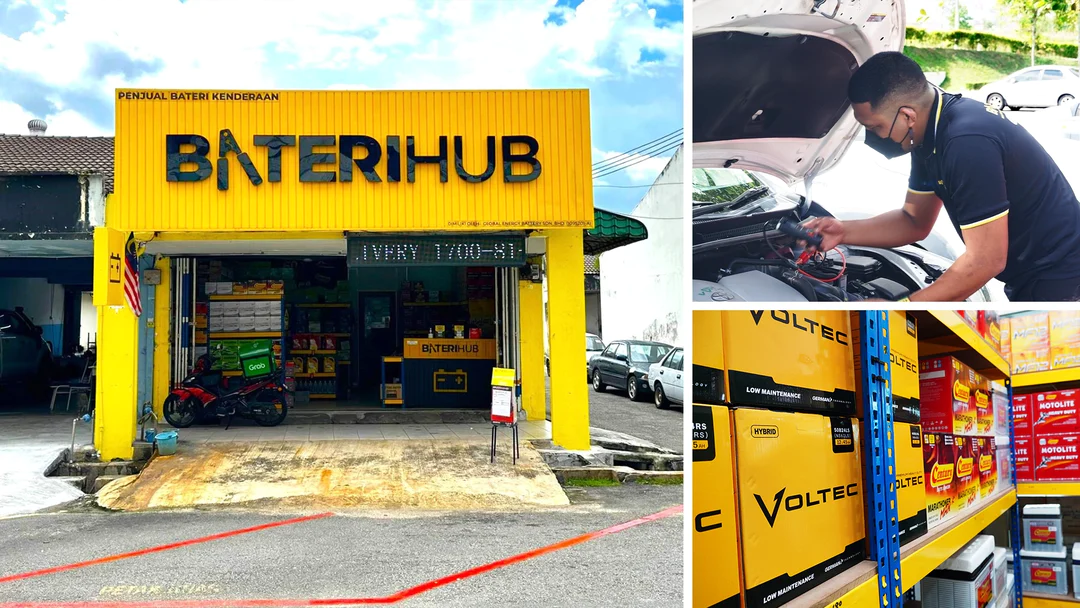
BateriHub Reaches 200-Store Milestone, Becomes Malaysia’s Largest...
Started by
The_Mechanic
News and Features
Search
Online now
Enjoying Zerotohundred?
Log-in
for an ad-less experience
Home
Forums
Main Forums
Car Talk
difference 92 and 97...