
Blow Off Valve - INFORMATIVE
Definitions
A compressor bypass valve (CPV) also known as a compressor relief valve is a vacuum-actuated valve designed to release pressure in the intake system of a turbocharged car when the throttle is lifted or closed. This air pressure is re-circulated back into the non pressurized end of the intake (before the turbo) but after the mass airflow sensor.
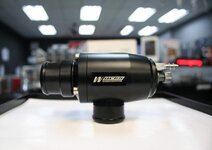
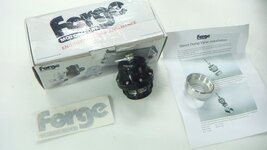
A blowoff valve, (BOV, sometimes hooter valve) does basically the same thing, but releases the air to the atmosphere. This creates a very distinctive sound desired by many who own turbocharged sports cars. Some blowoff valves are marketed with trumpet shaped exits that amplify the "psshh" sound. For some owners this is the only reason to fit a BOV.
Downsides of releasing air to atmosphere
This unique sound sometimes comes at a price. On a car with a mass airflow sensor, doing this confuses the ECU of the car. The ECU is told it has a specific amount of air in the intake system, and injects fuel accordingly. The amount of air released by the blowoff valve is not taken into consideration and the engine runs rich for a period of time.*
Typically this isn't a major issue, but sometimes it can lead to hesitation or stalling of the engine when the throttle is closed. This situation worsens with higher boost pressures. Eventually this can foul spark plugs and destroy the catalytic converter (when running rich, not all the fuel is burned which can heat up on and melt the converter).
Note that engines using a MAP (manifold absolute pressure) system are not affected.
Purpose of Relief and Blow-off Valves
It is used is to prevent compressor surge. Compressor surge is a phenomenon that occurs when lifting off the throttle of a turbocharged car (with a non-existent or faulty bypass valve). When the throttle plate on a turbocharged engine running boost closes, high pressure in the intake system has nowhere to go. It is forced to travel back to the turbocharger in the form of a pressure wave. This results in the wheel rapidly decreasing speed and stalling. The driver will notice a fluttering air sound. In extreme cases the compressor wheel will stop completely or even go backwards. Compressor surge is very hard on the bearings in the turbocharger and can significantly decrease its lifespan. In addition, the now slower moving compressor wheel takes longer to spool (speed up) when throttle is applied. This is known as turbo lag
With the implementation of either a bypass valve or a blowoff valve the pressurized air escapes, allowing the turbo to continue spinning. This allows the turbocharger to have less turbo lag when power is demanded next.
How It Works?
http://img237.imageshack.us/img237/2770/throttlebodyopenho9.jpg
http://img172.imageshack.us/img172/6438/throttlebodyclosedbc7.jpg
A blow-off-valve is connected by a vacuum hose to the intake manifold after the throttle plate. When the throttle is closed, underpressure develops in the intake manifold after the throttle plate and "sucks" the blowoff valve open. The excess pressure from the turbocharger is vented into the atmosphere or recirculated into the intake upstream of the compressor inlet.
Tuning adjustable valves
Most aftermarket valves are adjustable leaving customers curious on how to set them properly for their vehicle. Typically the adjustment lies in the spring preload. Here is how to set it.
You want the spring as soft as possible without leaking boost at peak pressure. A spring set too soft and the valve will not close fully resulting in a boost leak and idle problems. Set it too hard and the spring will not open, close too early, and have compressor surge.
Trial and error with an accurate boost gauge is the perfect way to find the right setting for your vehicle.
Blow-Off Valve Info
This article aims to educate the Evo-driving public about compressor bypass valves and blow-off valves.
Definitions:
A compressor bypass valve (CBV) is a vacuum-actuated valve designed to release pressure from the intake tract of a turbo car when the throttle closes.It re-circulates the air back into the intake before the turbo inlet, but after the airflow sensor.
A blow-off valve (BOV) does the same thing, but the released air is vented into the atmosphere.
Purpose of a CBV:
The reason most turbo cars have a CBV is that when the throttle closes and the intake system is under pressure, the high-pressure air entering the motor will bump into the closed throttle plate, and (in the absence of a CBV) a pressure wave will travel back to the turbocharger.The result is that the compressor wheel will stall (a phenomenon known as “compressor surgeE and slow down very quickly.This is hard on the bearings and decreases the turbo's lifespan, but it also means the turbo will take longer to spin up the next time the throttle is opened.
With the CBV in place, the pressurized air in front of the throttle body is released, and the turbo can freewheel happily.When the throttle opens again, the turbo will have a head start and will get up to speed faster, since it never stopped spinning in the first place.
Blow-Off Valves: Pros and Cons
A BOV does the exact same thing as a CBV, but the vented air is released to the atmosphere, causing a loud PSSSSHT!Eventing noise that is distinctive and attention-getting.Many turbo car owners (and people who wish they had turbo cars) love the noise.
The downside of releasing the air to atmosphere is that it has already been metered by the mass air sensor (MAS), and when it blows off the ECU will be injecting the wrong amount of fuel into the cylinders. (The MAS reads ten air units, say, and the ECU tells the injectors to squirt the right amount of fuel for ten air units.But then five of those air units are vented off to atmosphere, and only five make it to the cylinders, and five more have to be drawn from the outside air, through the MAS again) so the engine temporarily runs extremely rich, meaning too much fuel is injected into the cylinders.
This temporary rich condition isn't usually that harmful, but it can cause bucking or hesitation on lift-throttle.If the condition is really bad it can eventually foul spark plugs and even clog the catalytic converter.(Unburned fuel on the cat burns very hot, and too much of it can melt the cat).
You can't vent a stock CBV to atmosphere because the spring setting is too soft, and at idle or part-throttle it will open, which will confuse the MAS and cause rough running, stumbling, and stalling.A stiffer valve (like most aftermarket valves) will stay mostly closed at light vacuum, promoting better behavior when the valve is vented.The downside of stiffer valve spring pressure is that the valve may not open when releasing the throttle from light boost.This can cause some compressor surge (it sounds like a fluttering air noise), and can hinder turbo spool when shifting at light throttle angles.
CBV/BOV Tuning
Adjustable valves have a provision for changing the spring tension of the valve, usually in the form of a screw or a stack of shims for changing the spring preload.Customers often ask us how to set these.The short answer is that you want the valve as softly sprung as possible, while still stiff enough to hold the boost pressure you want to make.If set too soft, the valve will not close correctly the car will idle badly and bog when the throttle closes.If the valve is set too stiff, you will see lots of compressor surge, and the valve will not open at anything less than full pressure, and it will close too early, which defeats the whole purpose of having the valve.Use your boost gauge and your ear to figure out exactly what spring tension your car likes.Another handy tool is a hand vacuum/pressure pump, which you can apply to your stock valve and your aftermarket one to compare their behavior.Start with a spring tension that makes your aftermarket valve behave roughly the way your stock one does, and adjust from there.
BOV Maintenance Notes
The nature of a BOV means it is exposed the elements under the hood, and that means sand, grit, road dust, and other debris can get trapped in the works of the valve.Most aftermarket valves can be disassembled and cleaned.If your valve is jamming or doesn't seem to be working right, carefully take it apart, caution, the spring pressure is pretty strong! Eand clean all the parts.Lubricate the valve with whatever substance the manufacturer recommends, and reassemble.We find this solves 90% of all BOV problems.Some BOV's, like the Blitz model, come with an optional filter specifically for preventing this type of problem.
Recommendation
The best choice for drivability on the Evo is a CBV, which returns the vented air back to the intake.The stock valve works pretty well, although its plastic construction means it may leak a little at high boost levels.If you are going to run higher-than stock boost, you may want to run an aftermarket valve with tighter and/or adjustable spring pressure.
If you really want the noise and attention of a BOV, go for an aftermarket unit.Be prepared for some occasional stumbling and part-throttle compressor surge, but it's nothing most people can't live with.For a lot of our customers, the sheer thrill of that noise every time they get off the gas is worth any minor issues.
More references: http://features.evolutionm.net/article/machvcorner/29
Definitions
A compressor bypass valve (CPV) also known as a compressor relief valve is a vacuum-actuated valve designed to release pressure in the intake system of a turbocharged car when the throttle is lifted or closed. This air pressure is re-circulated back into the non pressurized end of the intake (before the turbo) but after the mass airflow sensor.
A blowoff valve, (BOV, sometimes hooter valve) does basically the same thing, but releases the air to the atmosphere. This creates a very distinctive sound desired by many who own turbocharged sports cars. Some blowoff valves are marketed with trumpet shaped exits that amplify the "psshh" sound. For some owners this is the only reason to fit a BOV.
Downsides of releasing air to atmosphere
This unique sound sometimes comes at a price. On a car with a mass airflow sensor, doing this confuses the ECU of the car. The ECU is told it has a specific amount of air in the intake system, and injects fuel accordingly. The amount of air released by the blowoff valve is not taken into consideration and the engine runs rich for a period of time.*
Typically this isn't a major issue, but sometimes it can lead to hesitation or stalling of the engine when the throttle is closed. This situation worsens with higher boost pressures. Eventually this can foul spark plugs and destroy the catalytic converter (when running rich, not all the fuel is burned which can heat up on and melt the converter).
Note that engines using a MAP (manifold absolute pressure) system are not affected.
Purpose of Relief and Blow-off Valves
It is used is to prevent compressor surge. Compressor surge is a phenomenon that occurs when lifting off the throttle of a turbocharged car (with a non-existent or faulty bypass valve). When the throttle plate on a turbocharged engine running boost closes, high pressure in the intake system has nowhere to go. It is forced to travel back to the turbocharger in the form of a pressure wave. This results in the wheel rapidly decreasing speed and stalling. The driver will notice a fluttering air sound. In extreme cases the compressor wheel will stop completely or even go backwards. Compressor surge is very hard on the bearings in the turbocharger and can significantly decrease its lifespan. In addition, the now slower moving compressor wheel takes longer to spool (speed up) when throttle is applied. This is known as turbo lag
With the implementation of either a bypass valve or a blowoff valve the pressurized air escapes, allowing the turbo to continue spinning. This allows the turbocharger to have less turbo lag when power is demanded next.
How It Works?
http://img237.imageshack.us/img237/2770/throttlebodyopenho9.jpg
http://img172.imageshack.us/img172/6438/throttlebodyclosedbc7.jpg
A blow-off-valve is connected by a vacuum hose to the intake manifold after the throttle plate. When the throttle is closed, underpressure develops in the intake manifold after the throttle plate and "sucks" the blowoff valve open. The excess pressure from the turbocharger is vented into the atmosphere or recirculated into the intake upstream of the compressor inlet.
Tuning adjustable valves
Most aftermarket valves are adjustable leaving customers curious on how to set them properly for their vehicle. Typically the adjustment lies in the spring preload. Here is how to set it.
You want the spring as soft as possible without leaking boost at peak pressure. A spring set too soft and the valve will not close fully resulting in a boost leak and idle problems. Set it too hard and the spring will not open, close too early, and have compressor surge.
Trial and error with an accurate boost gauge is the perfect way to find the right setting for your vehicle.
Blow-Off Valve Info
This article aims to educate the Evo-driving public about compressor bypass valves and blow-off valves.
Definitions:
A compressor bypass valve (CBV) is a vacuum-actuated valve designed to release pressure from the intake tract of a turbo car when the throttle closes.It re-circulates the air back into the intake before the turbo inlet, but after the airflow sensor.
A blow-off valve (BOV) does the same thing, but the released air is vented into the atmosphere.
Purpose of a CBV:
The reason most turbo cars have a CBV is that when the throttle closes and the intake system is under pressure, the high-pressure air entering the motor will bump into the closed throttle plate, and (in the absence of a CBV) a pressure wave will travel back to the turbocharger.The result is that the compressor wheel will stall (a phenomenon known as “compressor surgeE and slow down very quickly.This is hard on the bearings and decreases the turbo's lifespan, but it also means the turbo will take longer to spin up the next time the throttle is opened.
With the CBV in place, the pressurized air in front of the throttle body is released, and the turbo can freewheel happily.When the throttle opens again, the turbo will have a head start and will get up to speed faster, since it never stopped spinning in the first place.
Blow-Off Valves: Pros and Cons
A BOV does the exact same thing as a CBV, but the vented air is released to the atmosphere, causing a loud PSSSSHT!Eventing noise that is distinctive and attention-getting.Many turbo car owners (and people who wish they had turbo cars) love the noise.
The downside of releasing the air to atmosphere is that it has already been metered by the mass air sensor (MAS), and when it blows off the ECU will be injecting the wrong amount of fuel into the cylinders. (The MAS reads ten air units, say, and the ECU tells the injectors to squirt the right amount of fuel for ten air units.But then five of those air units are vented off to atmosphere, and only five make it to the cylinders, and five more have to be drawn from the outside air, through the MAS again) so the engine temporarily runs extremely rich, meaning too much fuel is injected into the cylinders.
This temporary rich condition isn't usually that harmful, but it can cause bucking or hesitation on lift-throttle.If the condition is really bad it can eventually foul spark plugs and even clog the catalytic converter.(Unburned fuel on the cat burns very hot, and too much of it can melt the cat).
You can't vent a stock CBV to atmosphere because the spring setting is too soft, and at idle or part-throttle it will open, which will confuse the MAS and cause rough running, stumbling, and stalling.A stiffer valve (like most aftermarket valves) will stay mostly closed at light vacuum, promoting better behavior when the valve is vented.The downside of stiffer valve spring pressure is that the valve may not open when releasing the throttle from light boost.This can cause some compressor surge (it sounds like a fluttering air noise), and can hinder turbo spool when shifting at light throttle angles.
CBV/BOV Tuning
Adjustable valves have a provision for changing the spring tension of the valve, usually in the form of a screw or a stack of shims for changing the spring preload.Customers often ask us how to set these.The short answer is that you want the valve as softly sprung as possible, while still stiff enough to hold the boost pressure you want to make.If set too soft, the valve will not close correctly the car will idle badly and bog when the throttle closes.If the valve is set too stiff, you will see lots of compressor surge, and the valve will not open at anything less than full pressure, and it will close too early, which defeats the whole purpose of having the valve.Use your boost gauge and your ear to figure out exactly what spring tension your car likes.Another handy tool is a hand vacuum/pressure pump, which you can apply to your stock valve and your aftermarket one to compare their behavior.Start with a spring tension that makes your aftermarket valve behave roughly the way your stock one does, and adjust from there.
BOV Maintenance Notes
The nature of a BOV means it is exposed the elements under the hood, and that means sand, grit, road dust, and other debris can get trapped in the works of the valve.Most aftermarket valves can be disassembled and cleaned.If your valve is jamming or doesn't seem to be working right, carefully take it apart, caution, the spring pressure is pretty strong! Eand clean all the parts.Lubricate the valve with whatever substance the manufacturer recommends, and reassemble.We find this solves 90% of all BOV problems.Some BOV's, like the Blitz model, come with an optional filter specifically for preventing this type of problem.
Recommendation
The best choice for drivability on the Evo is a CBV, which returns the vented air back to the intake.The stock valve works pretty well, although its plastic construction means it may leak a little at high boost levels.If you are going to run higher-than stock boost, you may want to run an aftermarket valve with tighter and/or adjustable spring pressure.
If you really want the noise and attention of a BOV, go for an aftermarket unit.Be prepared for some occasional stumbling and part-throttle compressor surge, but it's nothing most people can't live with.For a lot of our customers, the sheer thrill of that noise every time they get off the gas is worth any minor issues.
More references: http://features.evolutionm.net/article/machvcorner/29