pimpin323 said:
how much er? and nak pasang kat maner nanti?
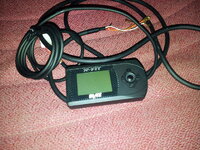
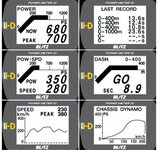
its easy...just connect to your OBD II plug...just ordered them from a friend...S$600, very good gadget if youre in tuning world
cut and paste from other website..
Ok finally researched and found out what all the R-Vit readings mean http://forums.mysubaruclub.com/images/smiles/icon_lol.gif
Injector Milliseconds
Number of milliseconds that each injector is open for for each cylinder cycle (2 revolutions of the crank). To get injector duty cycle from this take RPM * Injector ms/1200. This gives duty cycle in percent. If you are regularly seeing over 90% duty, you may need bigger injectors. The injectors must have enough 'head room' too cope with unexpectedly high air flows - these may be caused by overboost, faults and particularly cold weather.
O2
AKA lambda sensors. Monitor the amount of oxygen present in exhaust gases, in order to attain the air/fuel correct mixture. Values of 0 to 0.9 Volts are normal. 0 being lean, 0.9 being very rich. You will see the sensor voltage oscillate between these extremes when under closed loop control. Under high loads, you should never see the voltage drop below 0.7 Volts. If you do, something needs fixing - quite possibly your air flow sensor or fuel mapping.
The addition of cone style induction kits, whilst improving top end power and throttle response is known to upset air/fuel ratios. Alteration of the fuelling by the ecu is the solution.
AFC - Air Fuel Correction
When the fuelling is under closed loop control by the lambda sensor(s), this refers to the amount of fuel added or subtracted from the value retrieved from the fuel map. -5% would mean that the ecu is fuelling 5% less than the map says in order to achieve the ideal air/fuel ratio. Under high loads, the ECU switches off closed loop control, and uses values from the map. At this point, you will see AFC drop to 0%. This is why it is important that fuelling mapping is accurate (or at least rich) at high loads - the ECU does not compensate for errors here.
Battery Voltage
Measured voltage from the car battery. May be as low as 10 Volts when ignition is off. Should rise to around 14-15 when engine is running.
Coolant Temperature
Temperature in Centigrade of the cooling water. Expect to see around 85 -95 from a warmed up engine. Don't work the engine too hard until the temperature is at least 80 degrees.
Intake Manifold
This is boost pressure, and may be represented as absolute or relative, depending on the ECU. Absolute pressure in the manifold is relative to a vacuum. Subtract approx 14.7 PSI to get relative pressure. When boost pressure in the manifold is shown as relative to atmospheric pressure, negative values represent partial vacuums in the manifold.
As an example... If a car is said to be running 16 PSI of boost, this would be a 'manifold relative pressure' of 16 PSI, or a 'manifold absolute pressure' of 16 + 14.7 = 30.7 PSI. That's 16 PSI relative to the atmosphere, or 30.7 PSI relative to a complete vacuum.
1 atmosphere = 1 Bar = 14.7 PSI.
Ignition Timing
Ignition timing that the engine is currently running. 14 degrees at idle which advances to 40+ degrees when cruising.
Engine Speed
Speed of rotation of the engine in revolutions per minute.
Vehicle Speed
Speed of wheel rotation in kilometres per hour for standard wheel circumference. Data value may not be updated as frequently as engine speed, hence acceleration times may be more accurately determined from engine speed. This value may not be accurate if the car wheels or tyres have been changed.
Intake Air Temperature
Temperature of air drawn into the engine for combustion. Generally measured at the point of entry to the air filter. This will not give an indication of charge temperature, and so is not particularly useful.
Mass Air Flow / Air Flow Sensor Voltage
The rate of flow of air into the engine. Some ECUs report air flow voltage, whilst others report calculated flow rate. The voltage from which the ecu calculates mass air flow is non-linear, with smaller changes in output voltage being seen for flow changes at high rates compared with low flow rates.